Regulatory Mapping and Its Effects on Dynamic Reward Structures in Virtual Casino Platforms
Logan Schulz · Nov 2, 2026
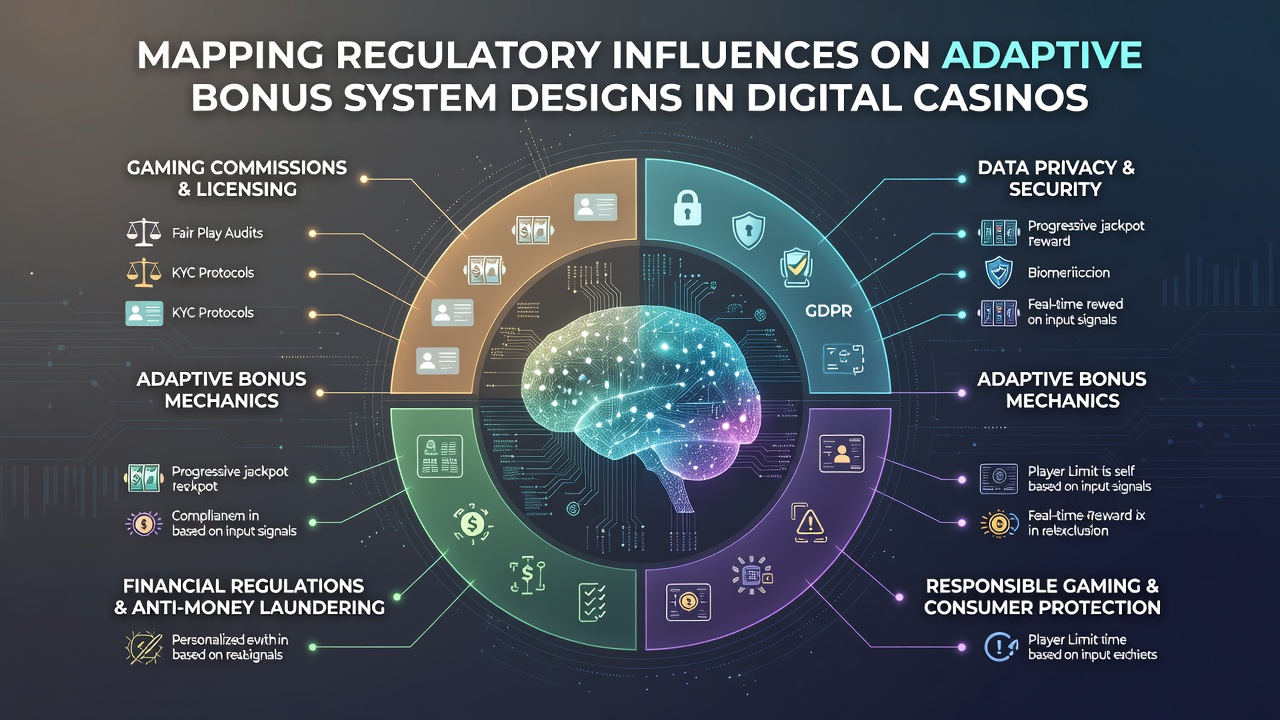
Regulatory Mapping and Its Effects on Dynamic Reward Structures in Virtual Casino Platforms
Digital casino operators have adjusted their adaptive bonus systems in response to shifting regulatory landscapes across multiple jurisdictions, and data from industry reports shows these changes affect how rewards scale based on player activity and compliance requirements. Regulatory bodies in different regions impose rules that dictate bonus structures, including wagering multipliers, eligibility criteria, and time-bound offers, which forces platforms to build flexible algorithms capable of real-time modifications.
Core Components of Adaptive Bonus Frameworks
Adaptive bonus systems rely on algorithms that modify reward values according to player behavior metrics, account status, and external compliance signals, while researchers at various gaming institutes note that these adjustments occur without manual intervention in most licensed environments. Operators integrate data points such as deposit frequency and session length into decision trees that trigger personalized offers, yet they must simultaneously align with caps on bonus amounts set by local statutes. This dual demand creates architectures where regulatory parameters sit at the core of the logic rather than as afterthoughts.
Regional Regulatory Pressures and Design Adjustments
In the United States, state-level gaming commissions enforce distinct bonus disclosure rules that require clear separation between promotional funds and player deposits, and operators respond by embedding automated flags that pause adaptive features when thresholds near state limits. European markets apply consumer protection directives that limit bonus persistence across sessions, prompting developers to program decay functions that reduce available rewards over defined intervals. Australian regulators, through the Australian Communications and Media Authority, mandate verification steps before bonus activation, which has led platforms to sequence adaptive offers behind identity checks in their backend workflows.
Canadian provincial authorities add further layers by requiring transparency reports on bonus conversion rates, and this obligation pushes companies to maintain audit trails that log every algorithmic tweak. Observers note that platforms operating across borders maintain separate rule sets for each jurisdiction, switching between them based on geolocation data to stay compliant without disrupting user experience.
Technical Implementation of Compliance Rules
Developers embed regulatory constraints directly into bonus engines using modular code that accepts jurisdiction-specific inputs, while data from system logs indicates these modules update automatically when new rules take effect. For instance, when a jurisdiction introduces a maximum bonus-to-deposit ratio, the system recalibrates offer generation to stay below that ceiling. November 2026 marks the scheduled rollout of updated cross-border reporting standards in select North American and European corridors, and platforms have already begun testing conditional logic that prepares for the additional data fields required.

Security protocols tie into these systems through encryption of player data used for personalization, and partnerships with academic research groups have produced studies showing reduced dispute rates when regulatory parameters receive priority in the design phase. One analysis from a European research consortium revealed that platforms incorporating regulatory mapping early in development cycles experienced fewer compliance incidents over multi-year periods.
Industry Examples and Data Patterns
Take the case of a multi-state operator that revised its loyalty bonus tiers after New Jersey's Division of Gaming Enforcement issued fresh guidelines on reward transparency, and internal metrics showed the revised system maintained engagement levels while satisfying reporting demands. Similar adjustments appear in markets where progressive bonus pools must respect aggregate limits, forcing adaptive engines to redistribute rewards dynamically across player segments. Figures from regulatory filings indicate that such changes correlate with steadier player retention when systems avoid abrupt offer terminations.
Industry organizations such as the International Association of Gaming Regulators track these patterns across member jurisdictions, and their aggregated reports highlight how bonus adaptability improves when operators maintain direct channels with regulators for advance notice of rule changes. This proactive approach reduces the need for emergency patches that could interrupt service.
Future Trajectories in Regulatory Alignment
Emerging proposals in several jurisdictions focus on standardizing data formats for bonus-related disclosures, which would allow platforms to streamline their adaptive engines across borders. Researchers continue to examine how machine learning models can incorporate new regulatory variables without retraining entire systems from scratch. Evidence from ongoing pilots suggests these models shorten the time between rule announcements and full compliance.
Conclusion
Regulatory mapping has become integral to the architecture of adaptive bonus systems in digital casinos, shaping everything from initial offer generation to ongoing adjustments based on player and jurisdictional inputs. Platforms that embed these constraints at the design stage demonstrate measurable alignment with evolving statutes, and continued collaboration between operators, regulators, and research entities supports smoother transitions as new requirements emerge.